Bryde Finance is a flexible, controlled budgeting app built for people on tight budgets who struggle with spending discipline.
Instead of fighting user behavior, Bryde:
Works with spending psychology
Prioritizes core survival needs
Uses automation, control, and gamification to build long-term financial habits
Many low- to average-income earners:
Get paid, then run out of money before essentials are covered
Spend funds meant for transport, food, or utilities
Borrow to survive, creating a cycle of debt
Feel guilty, frustrated, and financially powerless
“I spent my transport money on impulse, shifted bills around, then had to borrow to survive.”
This problem is common, recurring, and emotionally draining.
From research and competitor analysis:
Budgeting apps track spending, but don’t control it
Saving apps lock money away, causing users to borrow elsewhere
Most solutions focus on saving money, not saving the user
Discipline is assumed, not designed for
Insight:
People want control, but lack systems that support how they actually behave.

Methods
Online generative research
Surveys & user interviews
Behavioral psychology analysis
Key Insights
Spending is driven by values, emotions, and present bias
66.7% plan their finances, but most fail to follow through
Impulse spending usually comes from miscellaneous funds
Inflation breaks even the best intentions
Automation works best when users retain perceived control
Survival first. Discipline later. Saving last.
The solution was grounded in Maslow’s Hierarchy of Needs:
People must satisfy core needs (food, transport, safety)
Saving and investing fail when survival is unstable
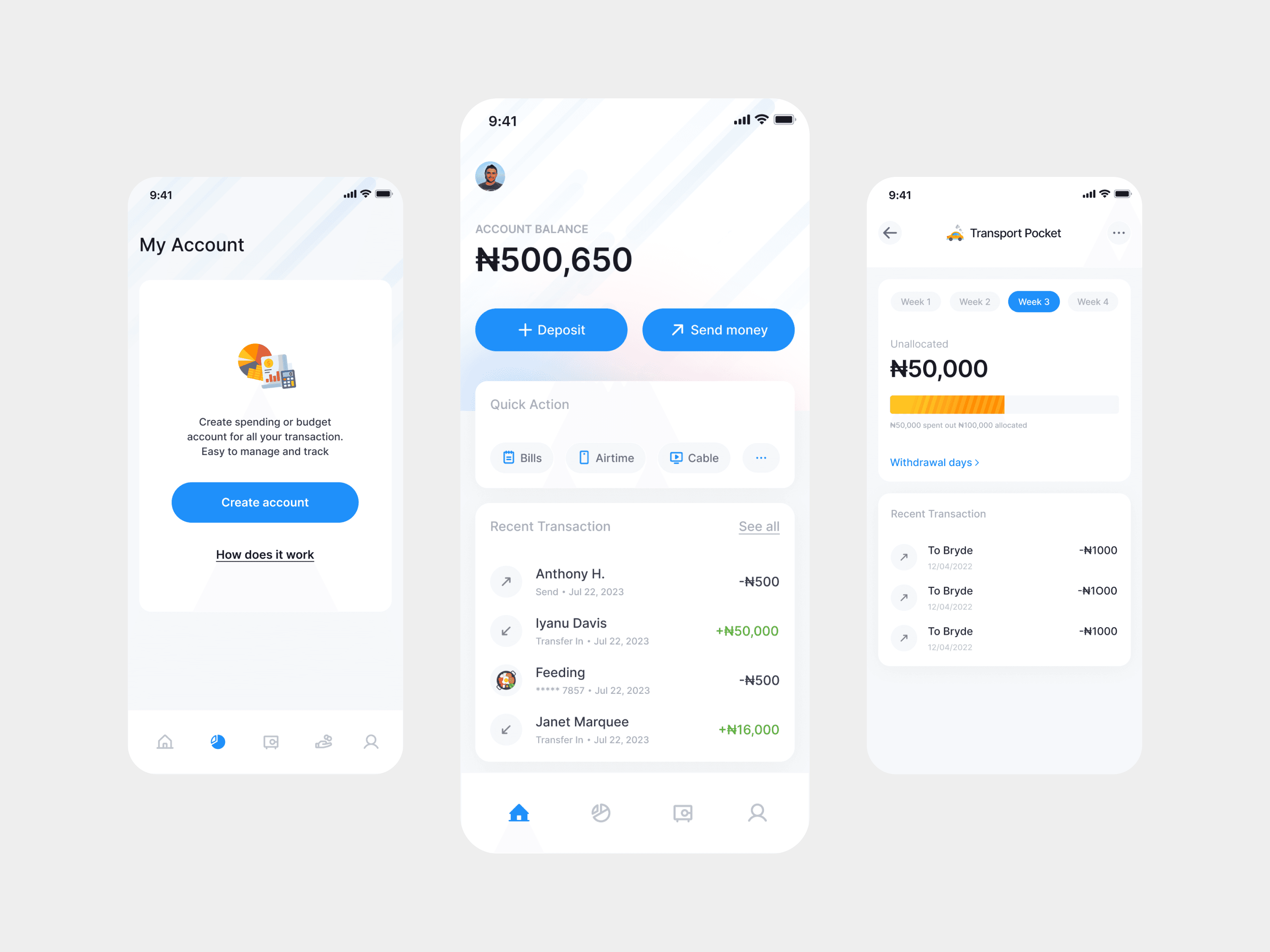
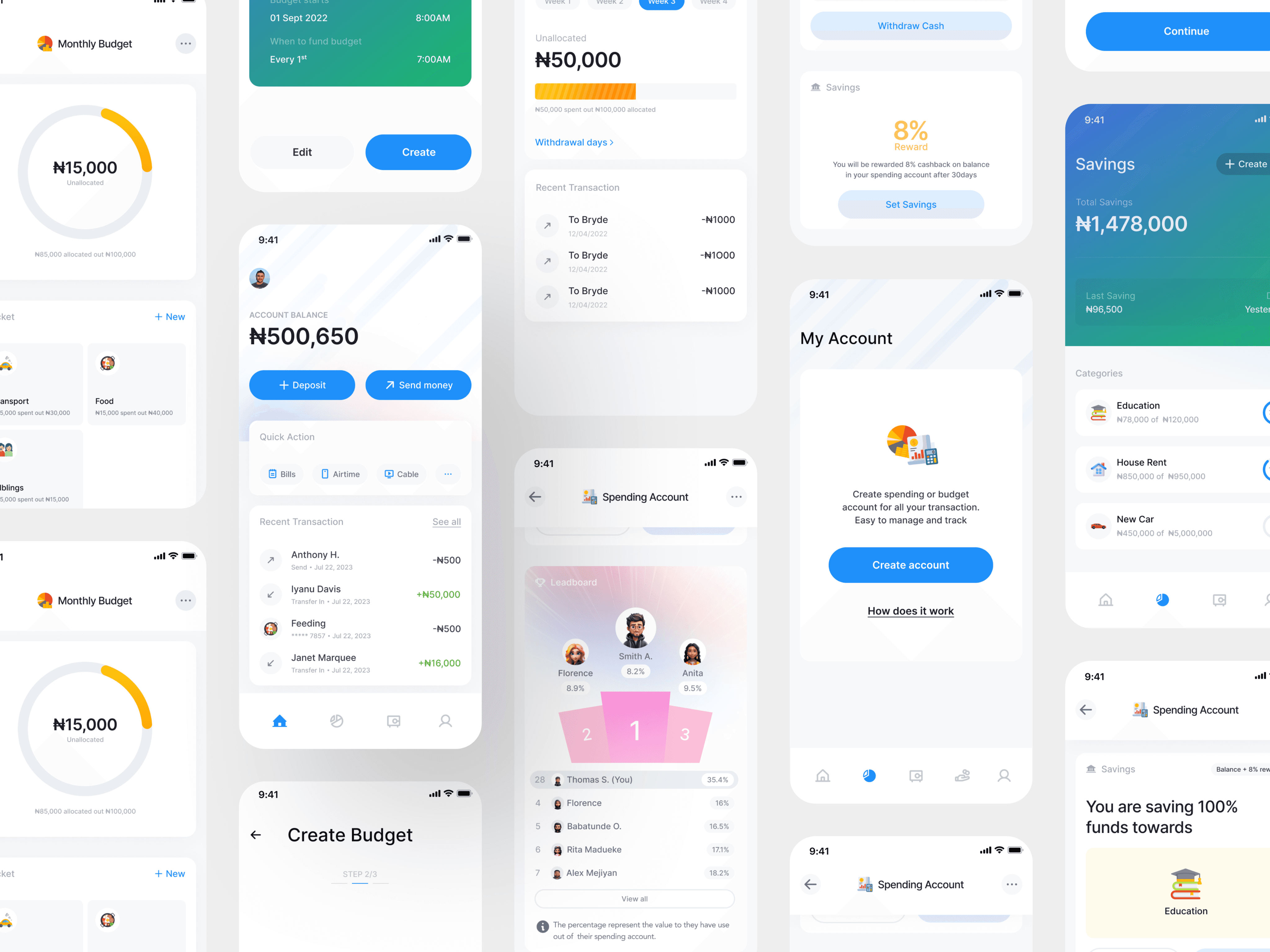
Flexible controlled Spending and Recurring budget account
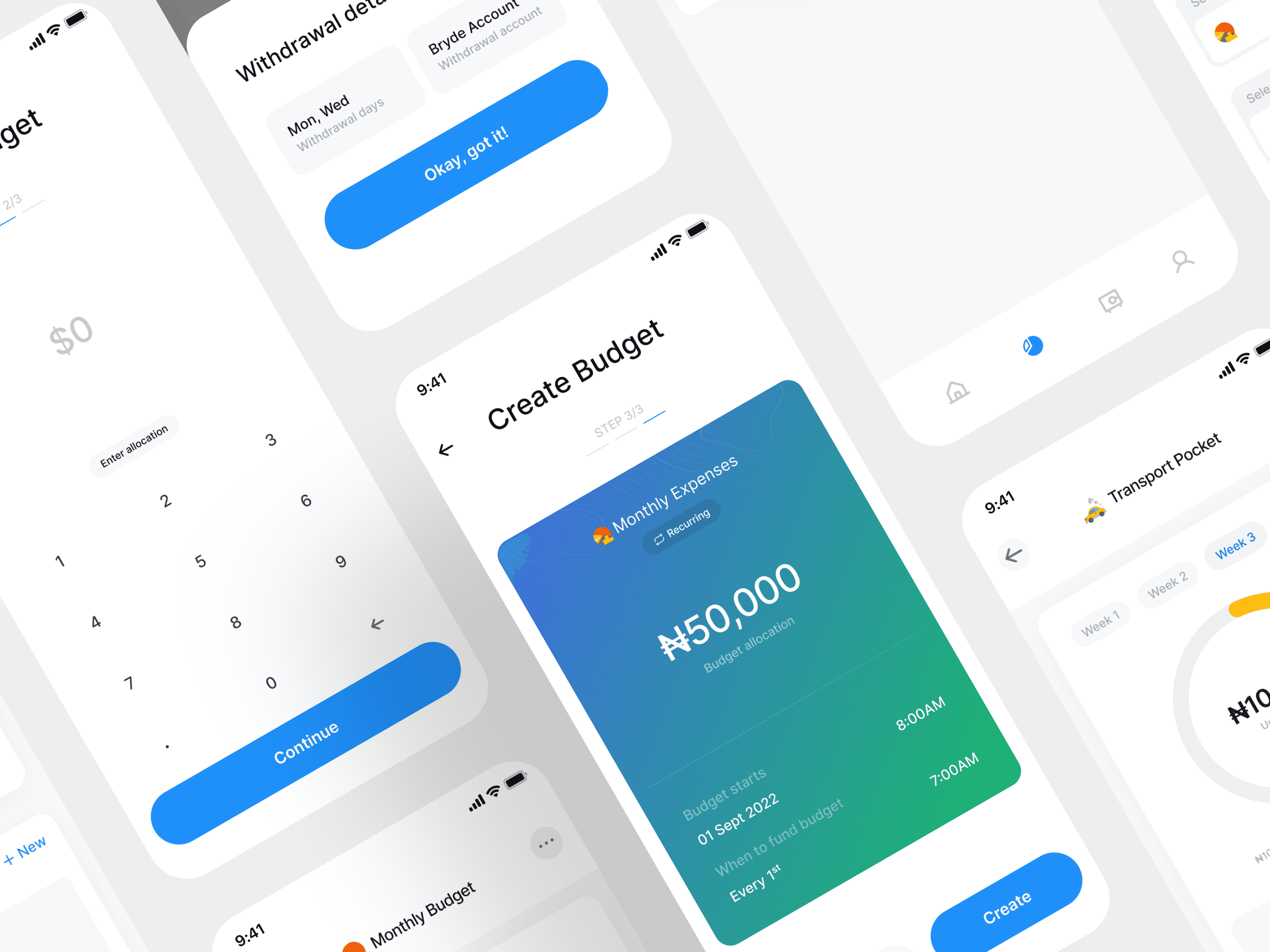
Mini pocket within budget for easy management and tracking of funds
Saving account which most of the money comes from rewards, left over from spending account.
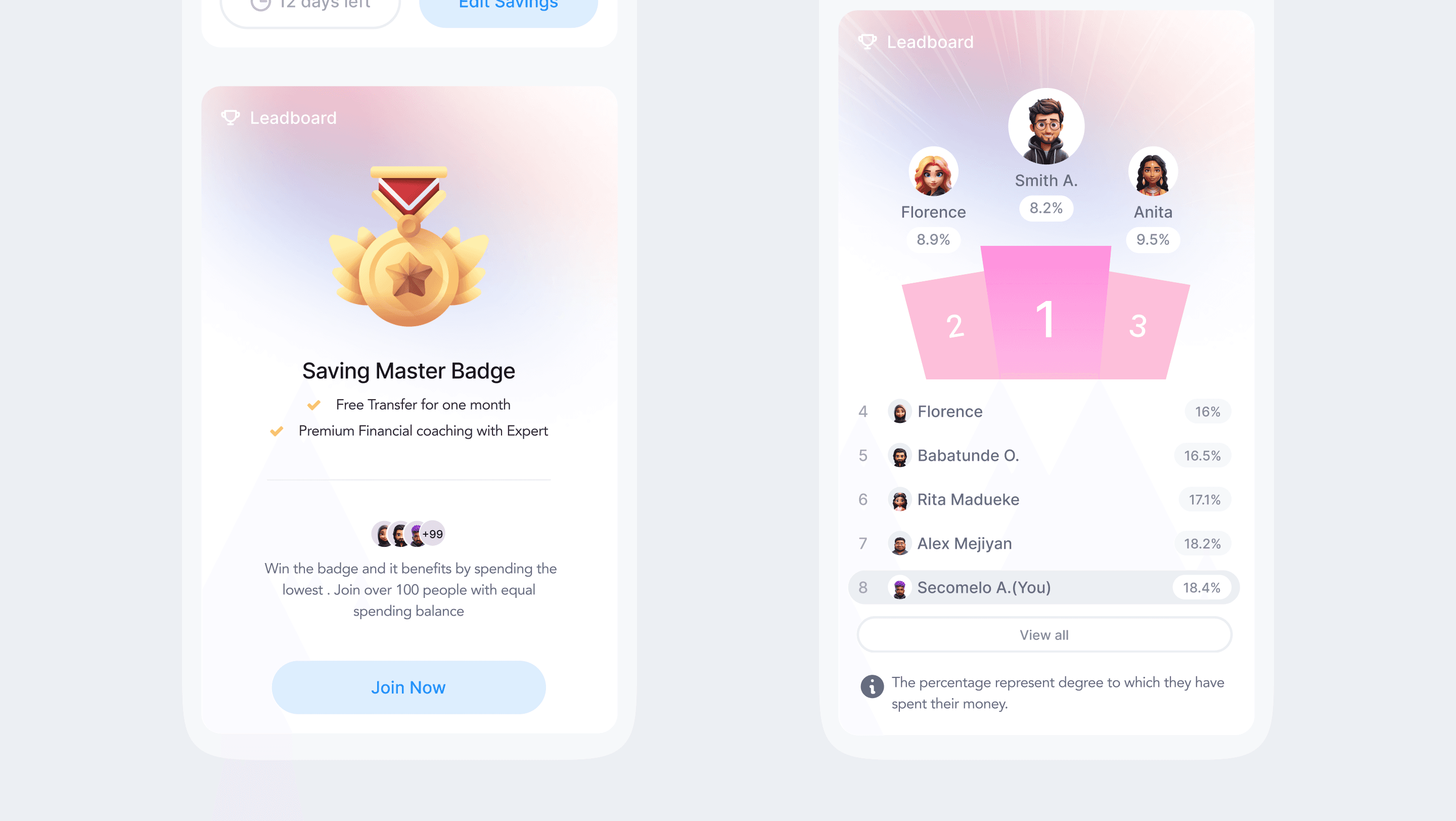
Motivation: Rewards/Incentives and Cashback/ Discounts,
Gamification of reward system
Create a credit overdraft facility so that users can purchase things they need ahead, incase of inflation. this will helps to reduce deficit and borrowing to cater for recurrent monthly expenses.
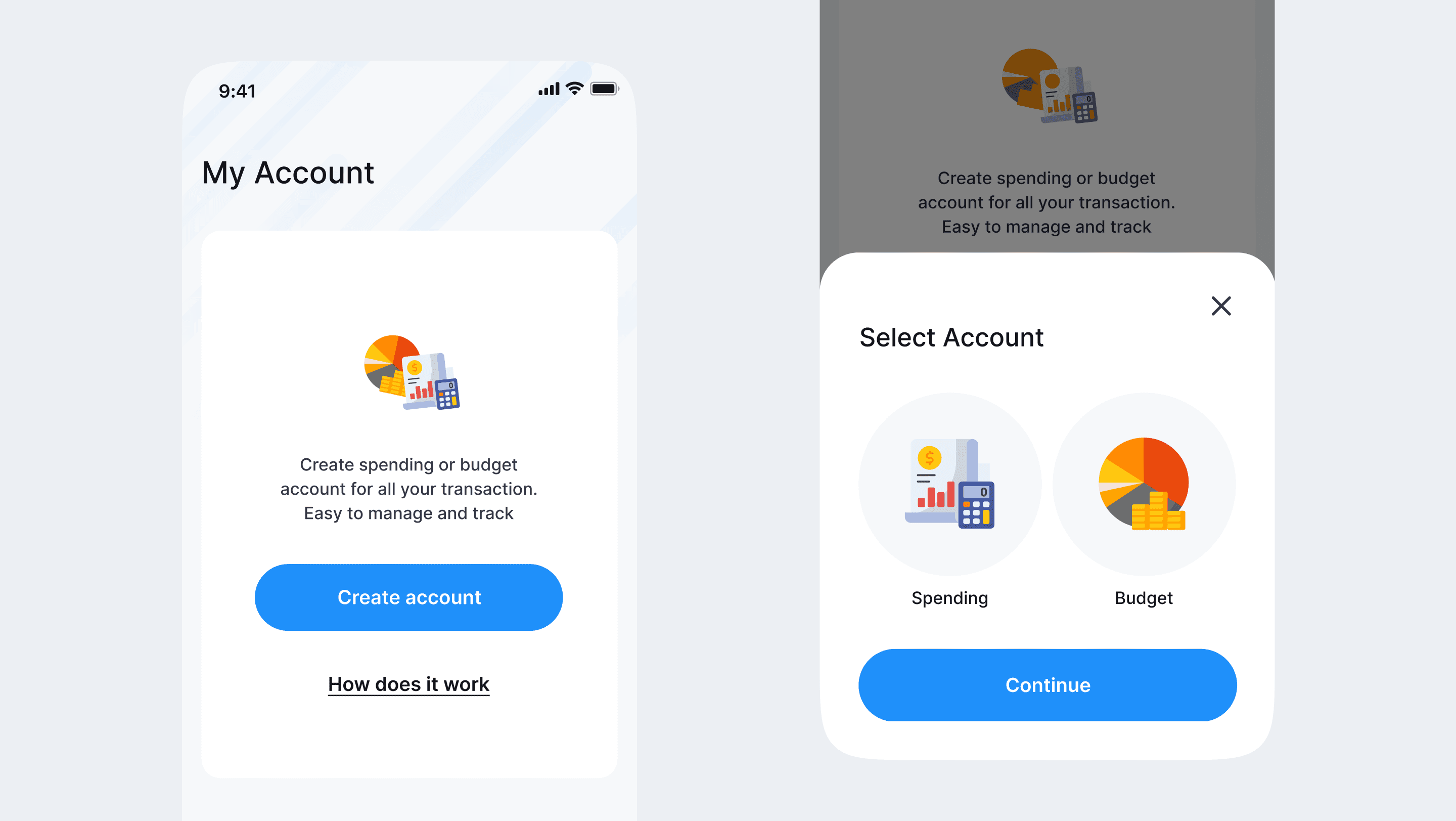
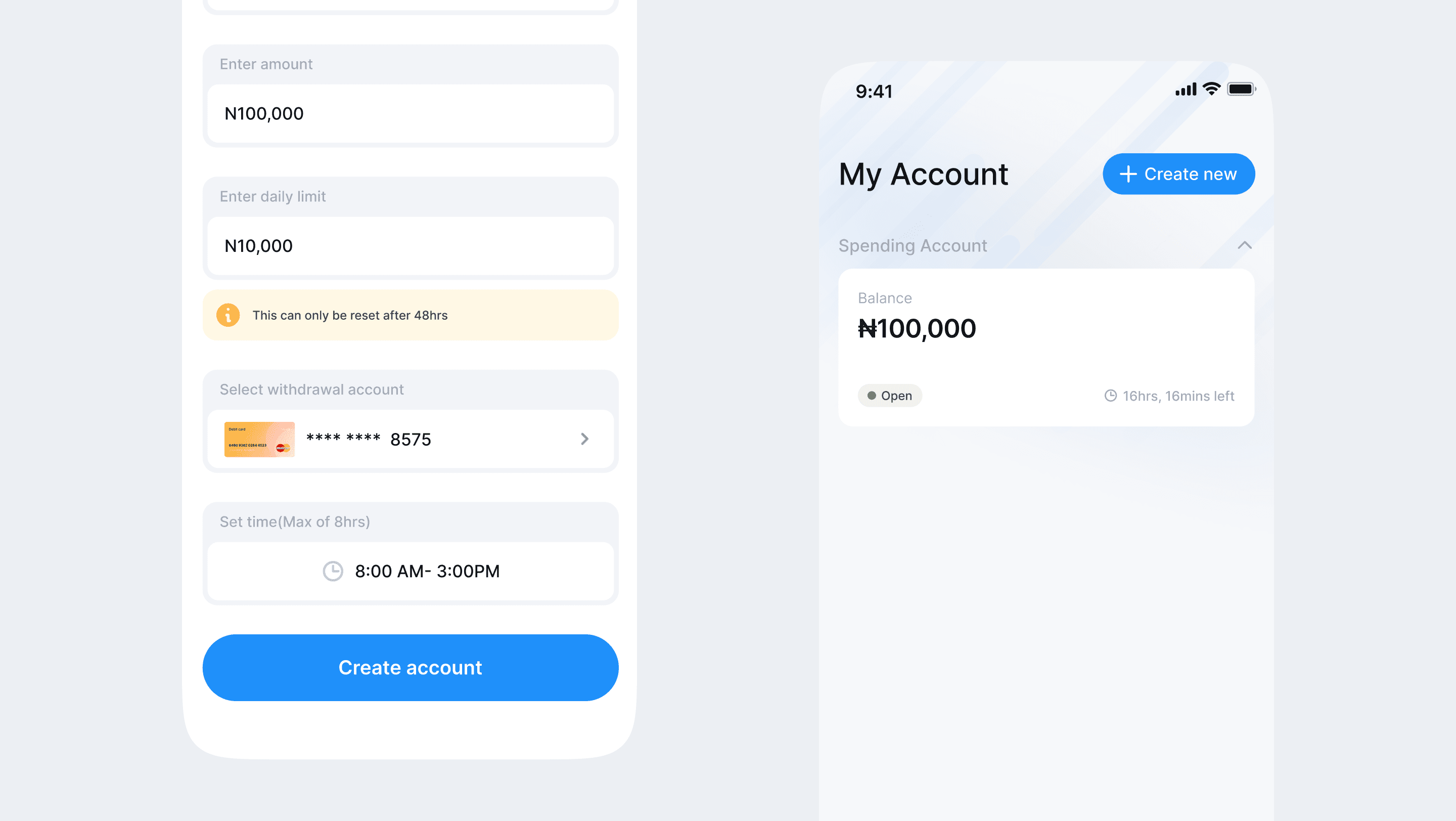
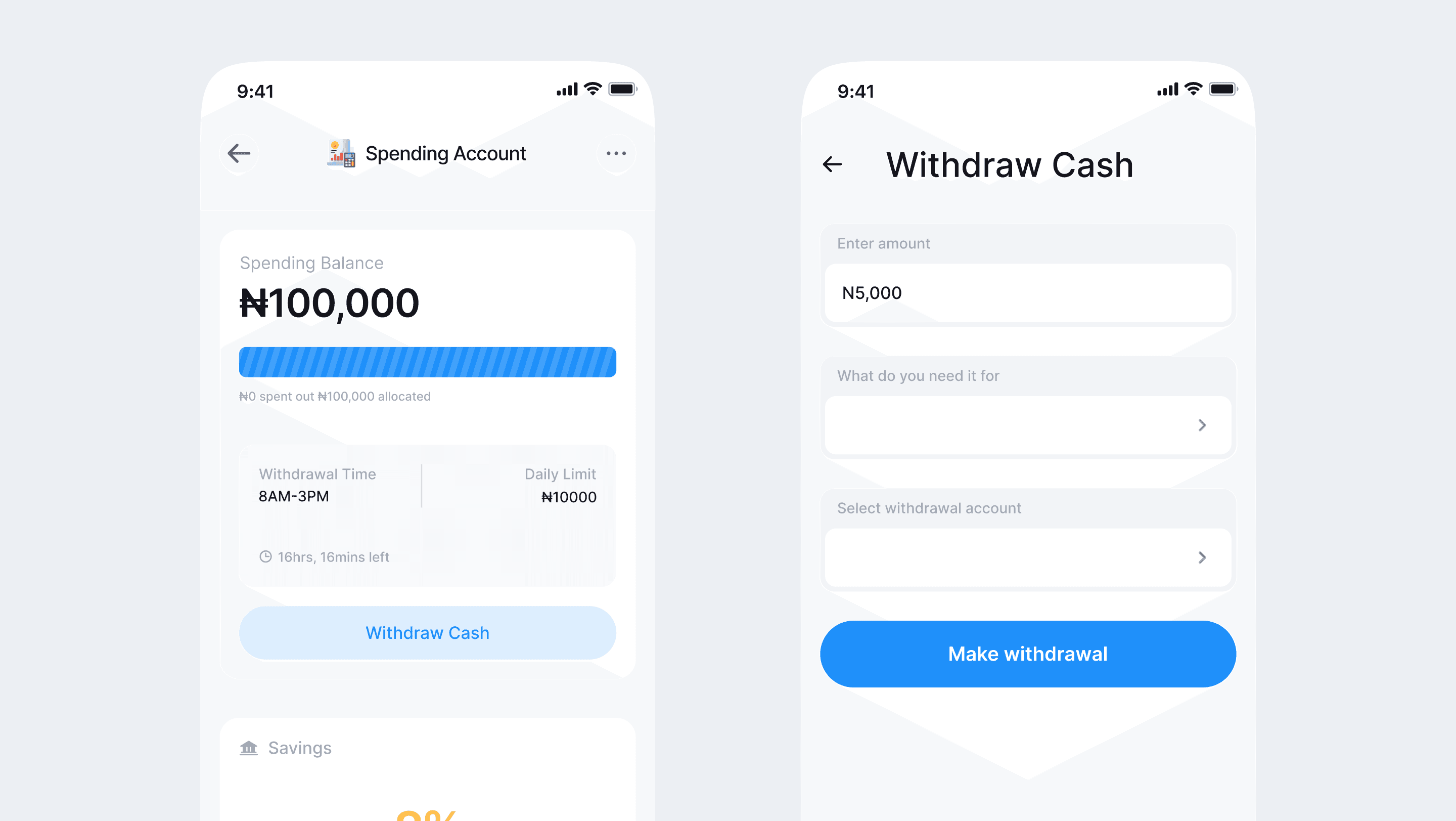
1. Spending Account (Impulse-Safe)
Designed for lifestyle and discretionary spending.
How it works:
Users set:
Daily spending limits
Active spending time windows
Account auto-locks when:
Limit is reached
Time expires
Why it works:
Users create their own rules
Reduces impulse spending without removing freedom
2. Budget Account (Survival-First)
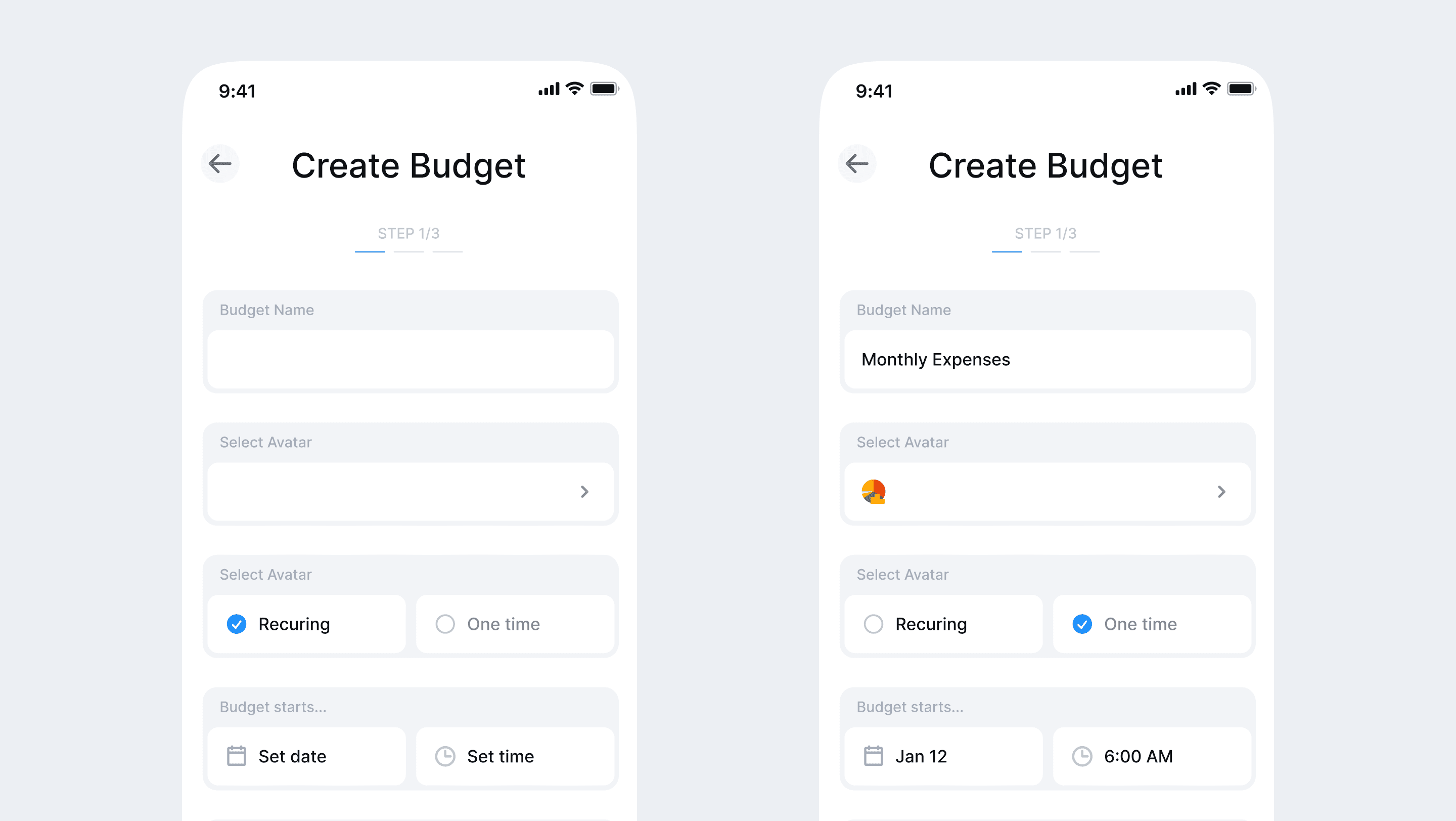
Used for fixed, recurring expenses.
Features:
Multiple budgets (monthly, one-time)
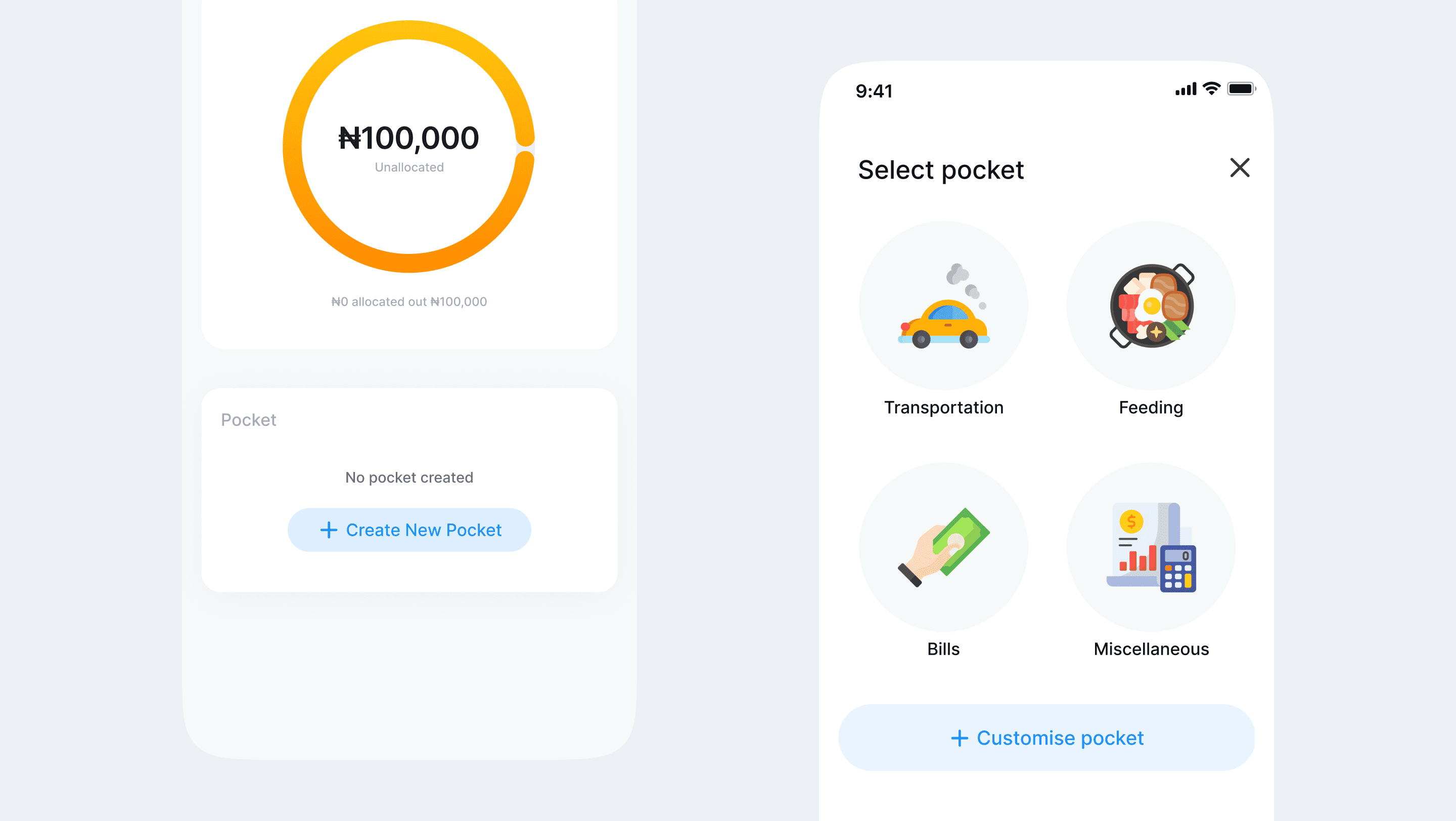
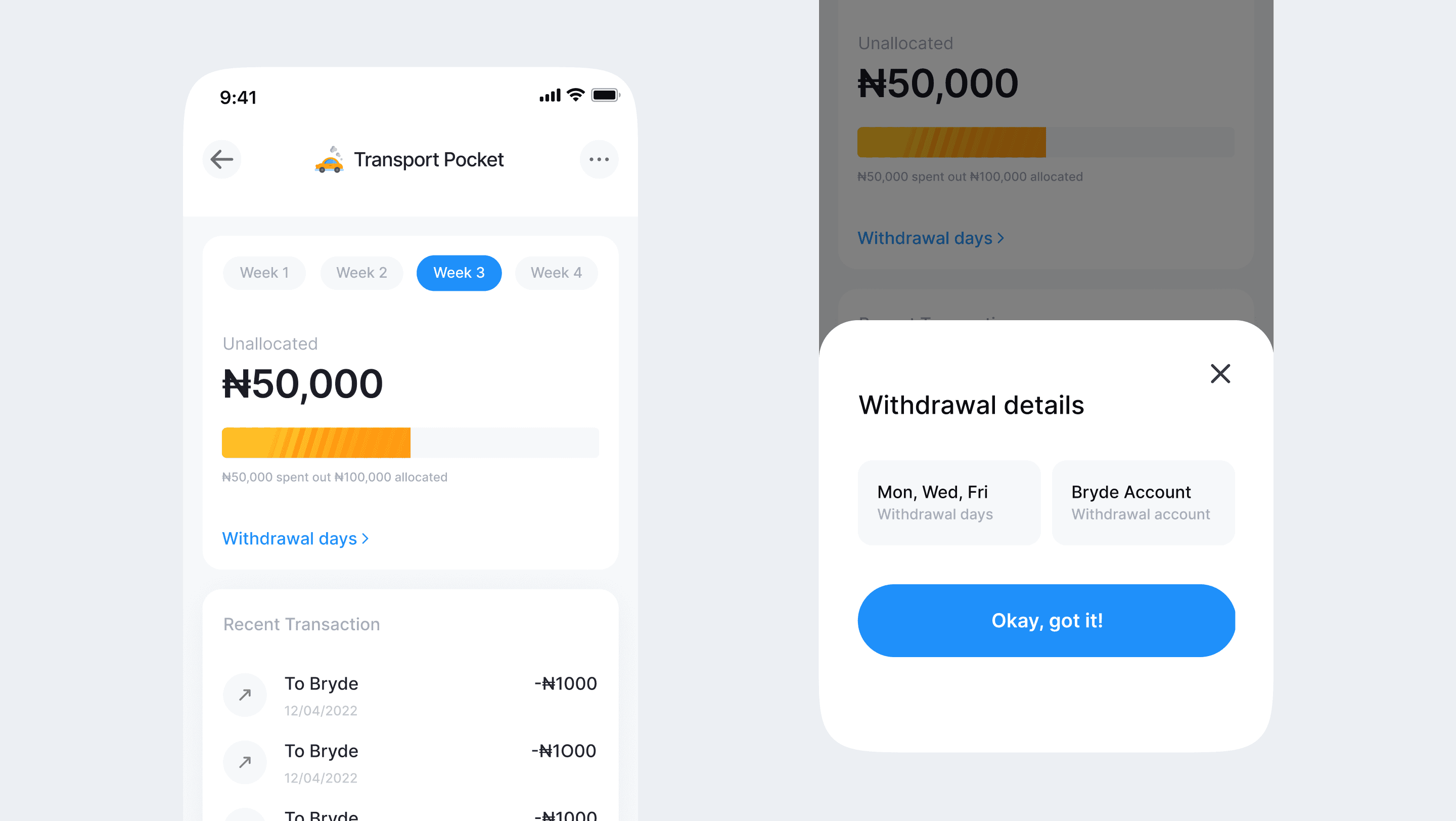
Sub-budgets (“Pockets”) for:
Feeding
Transport
Utilities
Automated fund allocation by date
Impact:
Prevents users from spending tomorrow’s necessities today
Matches real-life budgeting behavior (weekly / daily splits)
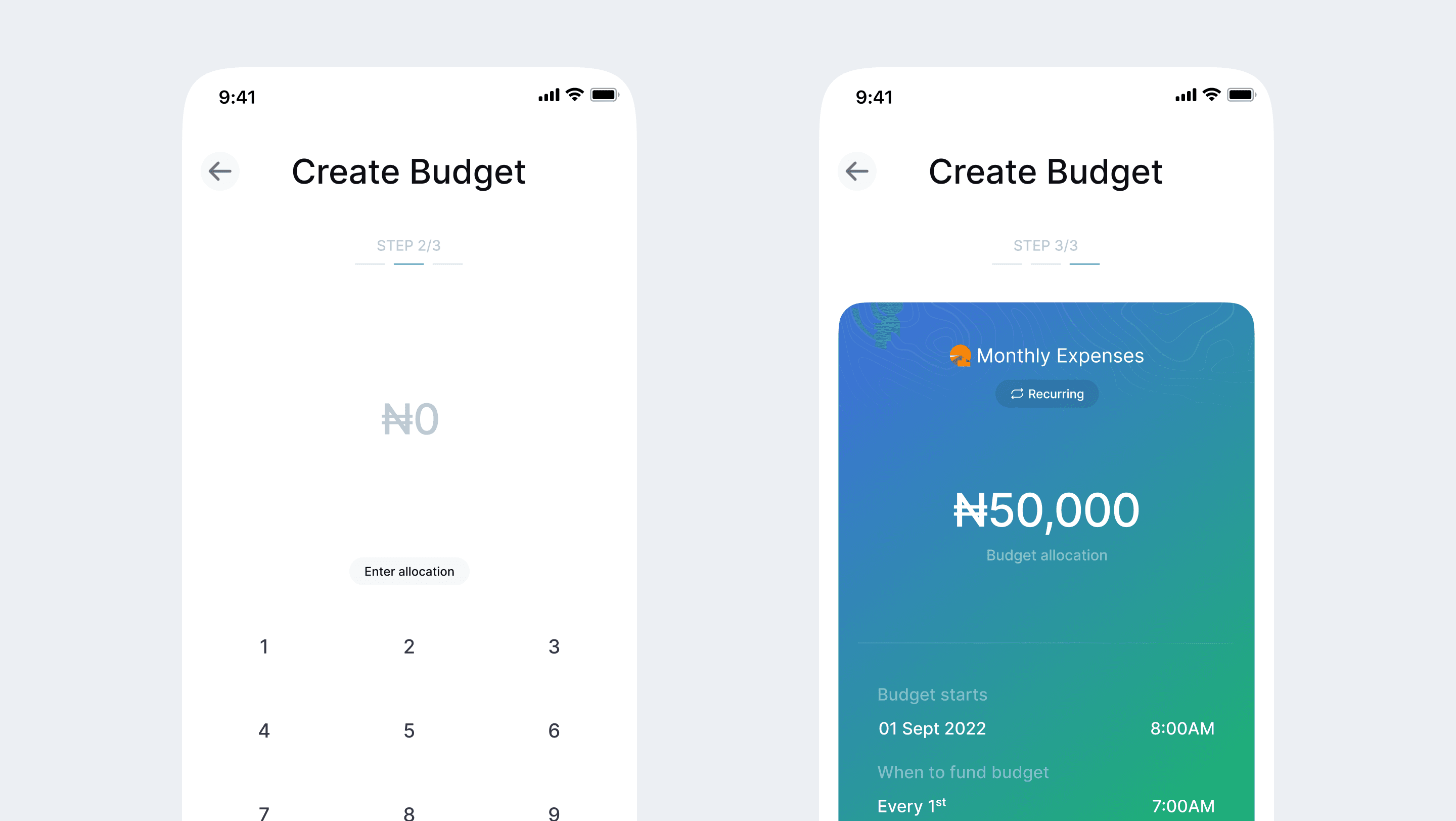
Budgets are broken into time-based pockets:
Weekly or daily allocations
Custom dispense dates
Funds can’t be misused prematurely
Result:
Users can’t sabotage essential needs, even during impulse moments.
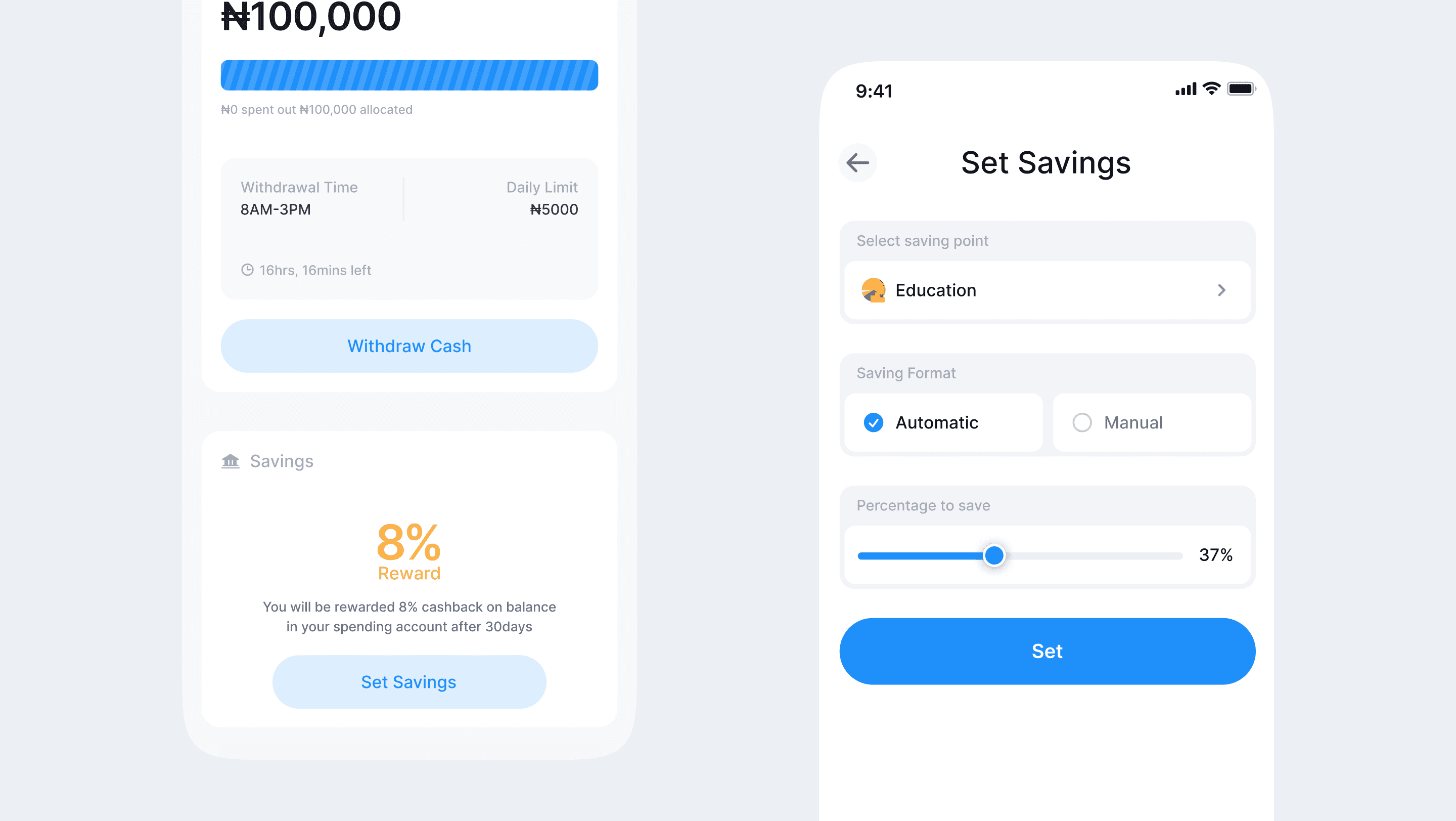
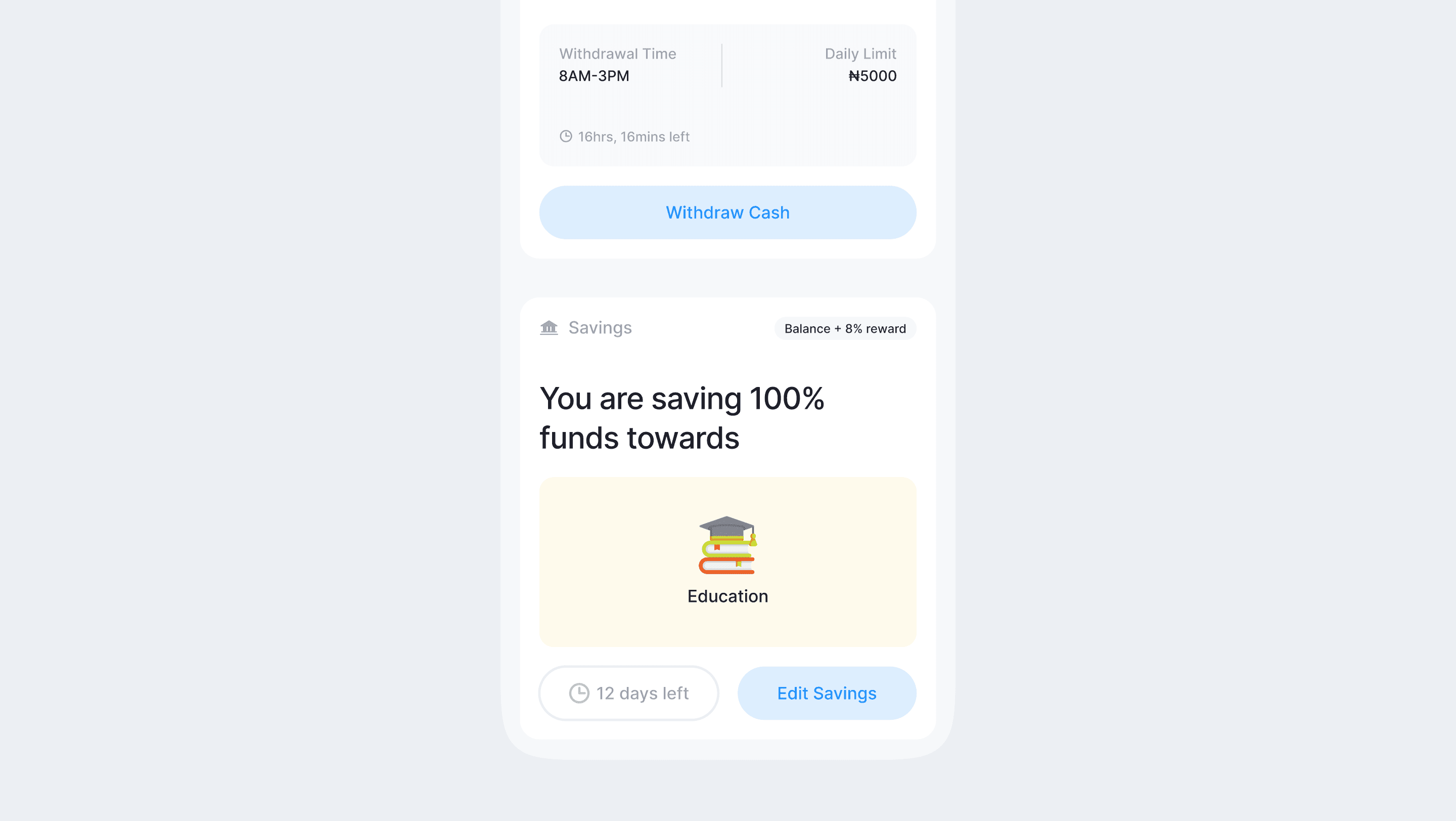
Default Saving via Rewards
Unspent money from the Spending Account: Automatically moves to savings
Tied to: Personal savings goals and behavioral rewards
Outcome:
Saving becomes a side effect, not a forced action
Users transition naturally into “natural savers”
✔ Designed around human behavior, not ideal behavior
✔ Prioritizes survival before savings
✔ Gives users control without chaos
✔ Builds discipline progressively — not instantly
Core adherence to monthly expenses budge from users, will indicate that users are discipline in the way they spend which is one of the core problem we are solving.
Having leftover miscellaneous money, means users have been able to reduce their over spending on impulse needs, which can be diverted into saving.
Bryde Finance doesn’t just manage money.
It redesigns how people relate to money — sustainably.
Thank you for reading